NT Project [React, Spring, Postgres]
Currently, I have been building business models and creating an admin panel and a UI demonstration for the models. I am working on the office-employee-service-appointment model. Once I have completed this I will move onto a product-oriented model. In terms of infrastructure, the project has monolithic services (which could be the representation of a company) and the monoliths are provided with generic business functionality through microservices. Current microservices are: security service, email service, sms service, and error reporting service. Here is a video demo (November 29, 2023).
Master Spring Boot 3 and MongoDB
Master Microservices with Spring Boot and Spring Cloud
Master Spring Boot 3 & Spring Framework 6 with Java Certificate
EcoMap [ESRI, JavaScript, Java, Maven, JUnit, Jenkins, Hibernate, MySQL, Docker, Ubuntu]
For my final semester, I was a co-lead with Matthew Drennen in a semester-long project. Here is the design document for the project. The project focus was on acquiring green-related data and displaying that data on a map. I focused developed the backend of the project using technologies such as Java, MySQL, Hibernate, JUnit, and JSP. I also developed and maintained a manually triggered continuous integration pipeline that allowed us to construct and deploy over 70 Docker images during development. The project GitHub can be found here. At the end of the project we produced the user manual, admin manual, and the developer documentation for the project.

Simple Calculator [Android, Flutter]
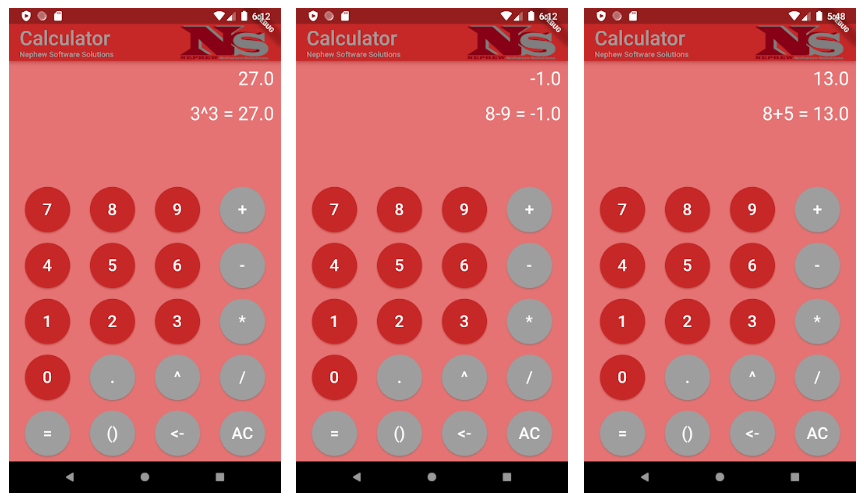
For my final project in Mobile Application Development I decided to develop a simple calculator application. I got it published on Google Play. The project GitHub can be found here.
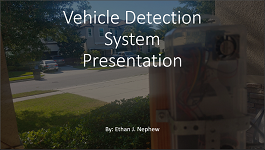
Vehicle Detection System [Raspberry Pi, Python, Jupyter Notebook]
One of my favorite projects that I have done is my small data collection system that detected vehicles entering my neighborhood. Please watch the video of the presentation and look at the project GitHub.
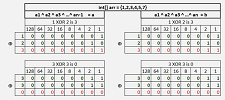
Logic Gates [Java]
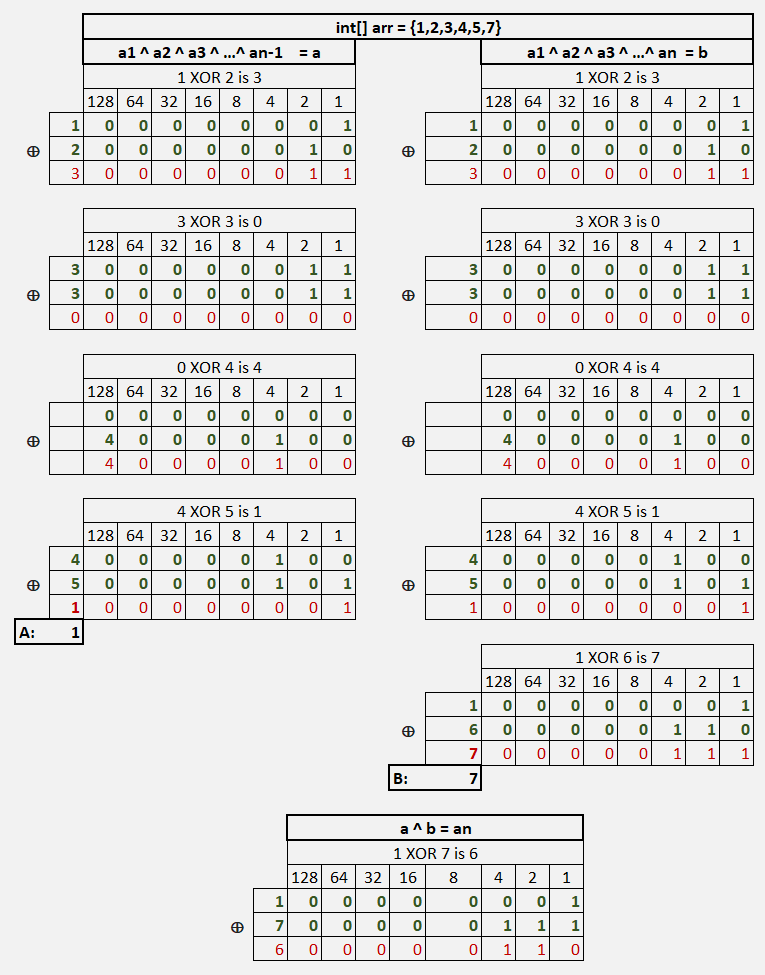
This is a personal research paper that I wrote about logic gates and how they manifest in Java. There was a moment when I realized I had not used logic gates with numbers. It was that realization that lead me to learn more about logic gates and their uses.
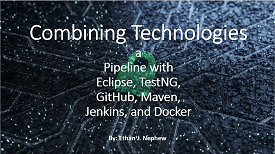
Pipeline Project [Java, Maven, TestNG, Jenkins, Docker]
This was a challenging project that required me to combine multiple different technologies in order to achieve a singular goal, which is a deliverable application. The pipeline uses Eclipse IDE, Maven, TestNG, Github, Jenkins, and Docker. The focus was not on the application itself, but rather it was about creating the pipeline that presents a deliverable at its endpoint.
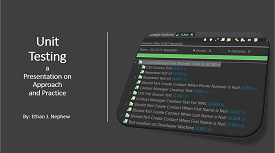
Unit Testing
In this slideshow I try to inspire others to adopt a heightened degree of rigor with respect to how they view their own code. Unit testing could be viewed as the materialization of the previously stated sentiment.
Communicating Technologies
A vital skill that I practice is finding ways to simply communicate complicated technologies. What we percieve to be complexity is usually a long linear path of simple steps. Similar to mathematics, finding ways to reduce unnecessary complexity in how we communicate is key.

Amazon Web Services and Distributed Systems [TLA+]
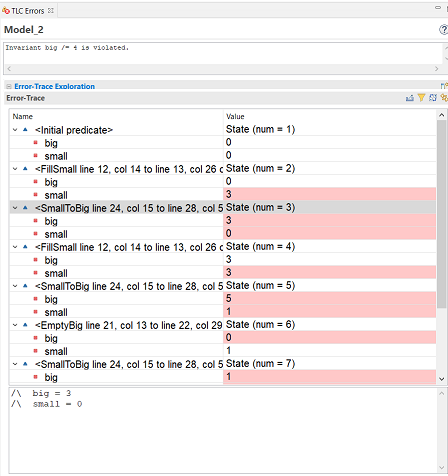
A topic that I am very interested in is learning and applying the methods that Amazon Web Services has used to test distributed systems. In particular, I am interested in how Amazon has used the formal specification language TLA+. I explored some of Leslie Lamport's tutorials. Specifically, I was intrigued how his tools could be used to find and express the solution to the Die Hard 3 water jug problem. I did a short video attempting to explain this scenario in TLA+.
Currency Converter Rate of Change Chart [Java, MySQL, JavaFX]
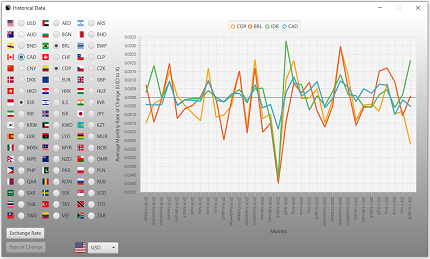
Sometimes the mere historical trend that is displayed in the Exchange Rate Chart does not give a user the entire picture. For the vast majority of use cases the Exchange Rate Chart should provide sufficient information to the user. Viewing how a given currencys rate of change trendline is can reveal some extra details. I also did a Dynamic Profiling document on the application statistics.
Currency Converter Exchange Rate Chart [Java, MySQL, JavaFX]
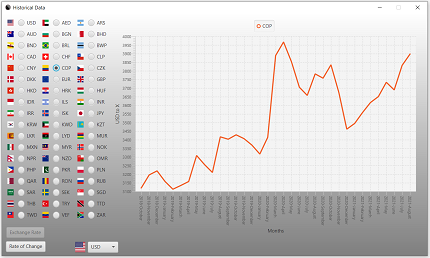
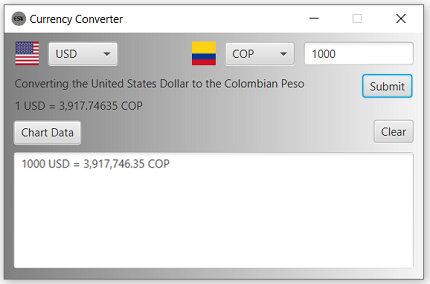
The Currency Converter Main Window will tell the user how much the exchange rate is today, but it cannot guide the user to determine if making an exchange is a good decision. In order to guide the user to make an educated decision, the application will chart historical data trends. The individual charting points are the averages for each specific month. Viewing this data can aid a user in viewing a currencys historical trend.
Currency Converter Main Window [Java, MySQL, JavaFX]
The second step is to run the client-side interface. The client doesn't conduct any calculations. It is merely used to display relevant data to the user. In order for the client to display data it must first send a data request object to the server. The server will then access the specific data from the database and send it to the client interface where it is displayed to the user.
Currency Converter Server [Java, MySQL, JavaFX]
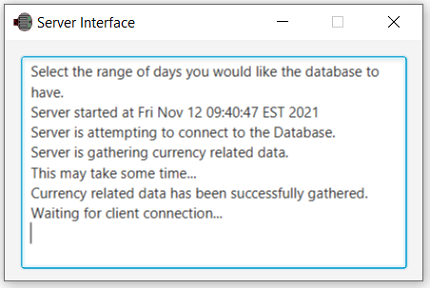
The client-server application begins by starting up the server. Before a client application can connect to the server, the server must first validate the data entries in the database. This can take some time depending on how much historical data must be generated.
US History Trivia Mobile Application [Flutter]
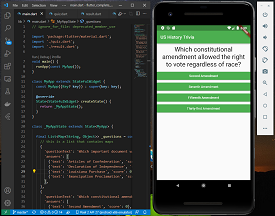
This is a simple United States trivia mobile application that I created. It is my first Flutter application. I used Android Studio to deploy the android virtual machine. The code based was developed using Visual Studio Code.
Amazon Web Services
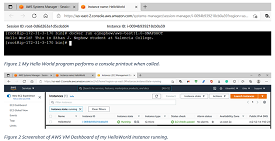
Here I created a really simple Java program that prints out to the console. I containerized the project and uploaded it to my Docker Hub. After that, I installed Docker on my AWS virtual machine, download the image from DockerHub, and the application container runs on command.
Simple Person Management Web App [HTML, CSS, MySQL, Java]
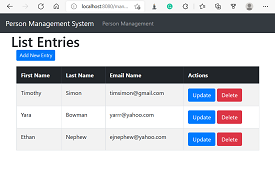
This is a generic person management system. The frontend uses the Bootstrap library. The use of Bootstrap allowed me to not have to work directly with CSS stylesheets. Thymeleaf expressions are used to access Java based objects and display them on HTML pages. Spring Boot is used to handle the back portion of the application. The CRUD operations are performed on a MySQL database.
RESTful Web Service with Client Portal [HTML, CSS, Java]
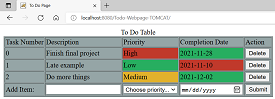
This is my RESTful web application. It utilicized basic HTML and CSS for the front end, Jakarta Server Pages to handle page events, Maven for its build process, Jersey to implement REST, Hibernate as a database medium, and it has MySQL database on the backend. I made an Interface Control Document for the interface that exists between the client side and the server side.
Microsoft SQL [MSSQL]
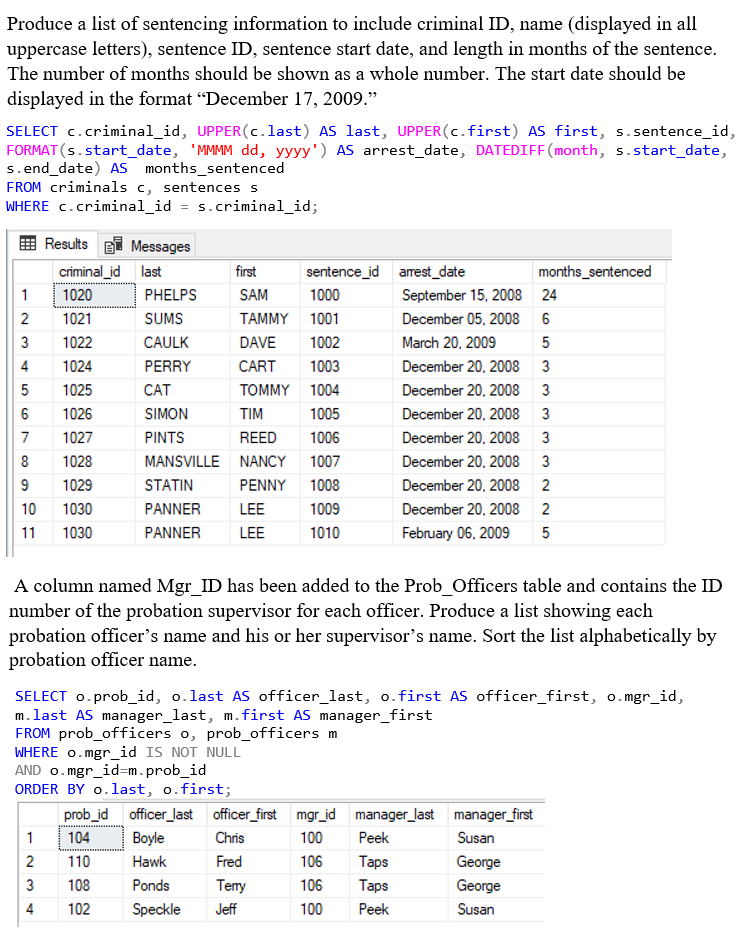
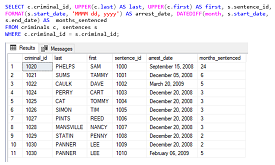
When I began learning MSSQL, I had a strong understanding of MySQL. Most of the MySQL principles and practices carried over to MSSQL but they do have differences.
Recursion & Iteration [Java]
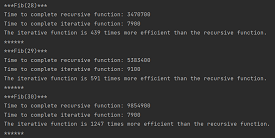
An analysis that I enjoyed doing was a comparison between iterative and recursive Fibonacci functions. I learned why recursion may not be the best solution in some scenarios. Perhaps apologetically, here is a paper on how to make recursive Fibonacci competative.
Another Race Program [C#]
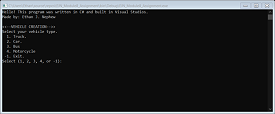
This is a different race program that I made in C#. The program takes advantage of some of the excellent tools that Microsoft provides. The program reads and writes each lap instance data to a file and file I/O is initiated by events.
Completion Time [Java]
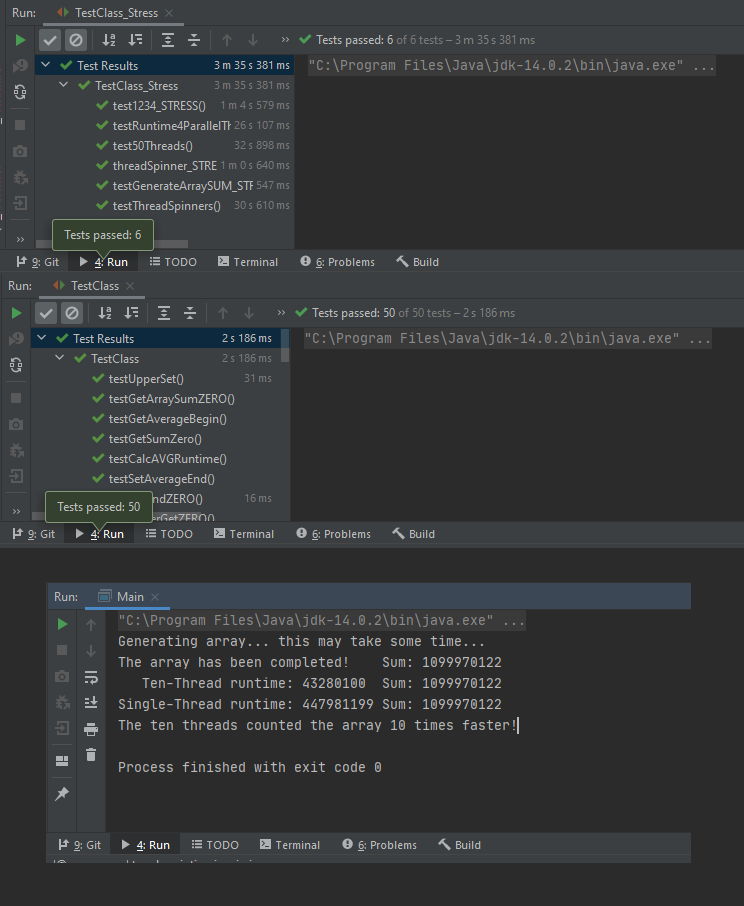
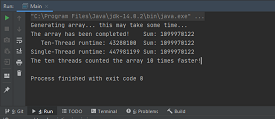
A task that I got very invested in was when I had to make an array of 200,000,000 random numbers between 1 and 10. After that, I had to compute the sum in parallel using multiple threads. The way I approached this problem was test-driven. I wrote unit tests for methods that I wanted to write. After I had my test cases fully devised, then I would proceed to create the methods. This approach required me to almost bring a defensive approach to how I would solve each little problem that I encountered. Through this development process my grasp of the problem and my solution for the problem tightened until the entire problem was solved.
Multi-Threaded Race Program In Action [Java]
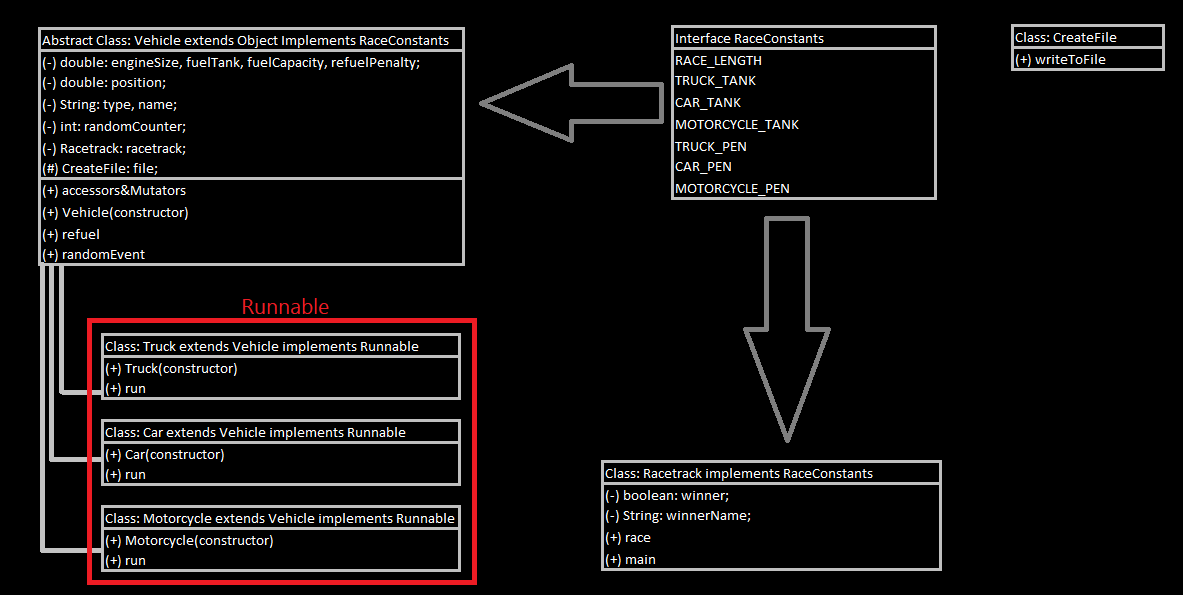
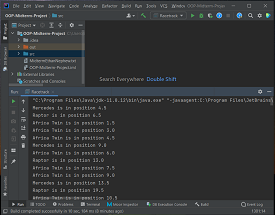
This is the demonstration of the multi-threaded program that was depicted in the UML diagram. It's interesting to observe how the threads will compete for a synchronized object. I particularly enjoyed creating random events that have negative and positive consequences for the thread that experiences them.
UML Diagram for Multi-Threaded Race Program
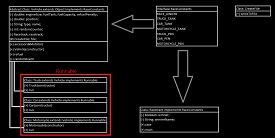
A program that I really enjoyed was where I simulated a race by implementing multi-threading. The 3 runnables continue through the race loop as fast as they can, but there are randomly generated events that can either be advantageous or disadvantageous for the individual racer. The first racer to complete 1000 laps wins the race. For this program all console printouts are also written to a text file.
First Java Program [Java]
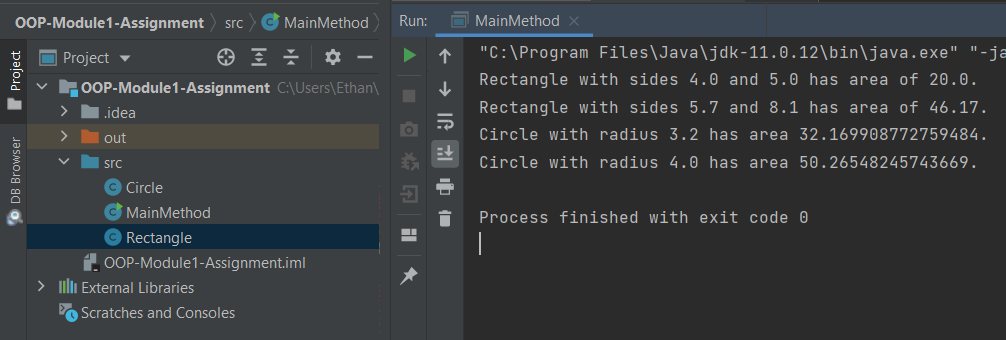
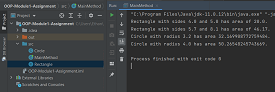
The first Java program I wrote was a simple object-oriented program that has Circle and Rectangle objects. The classes contained methods for calculating the area of each shape type.
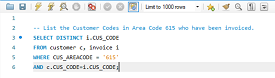
Writing Queries [MySQL]
From the first day of my Database Management Systems course my professor was having us write queries. At first, it was confusing, but I quickly gained a respect for the raw power of structured query language.
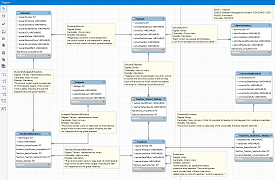
Designing Relational Databases
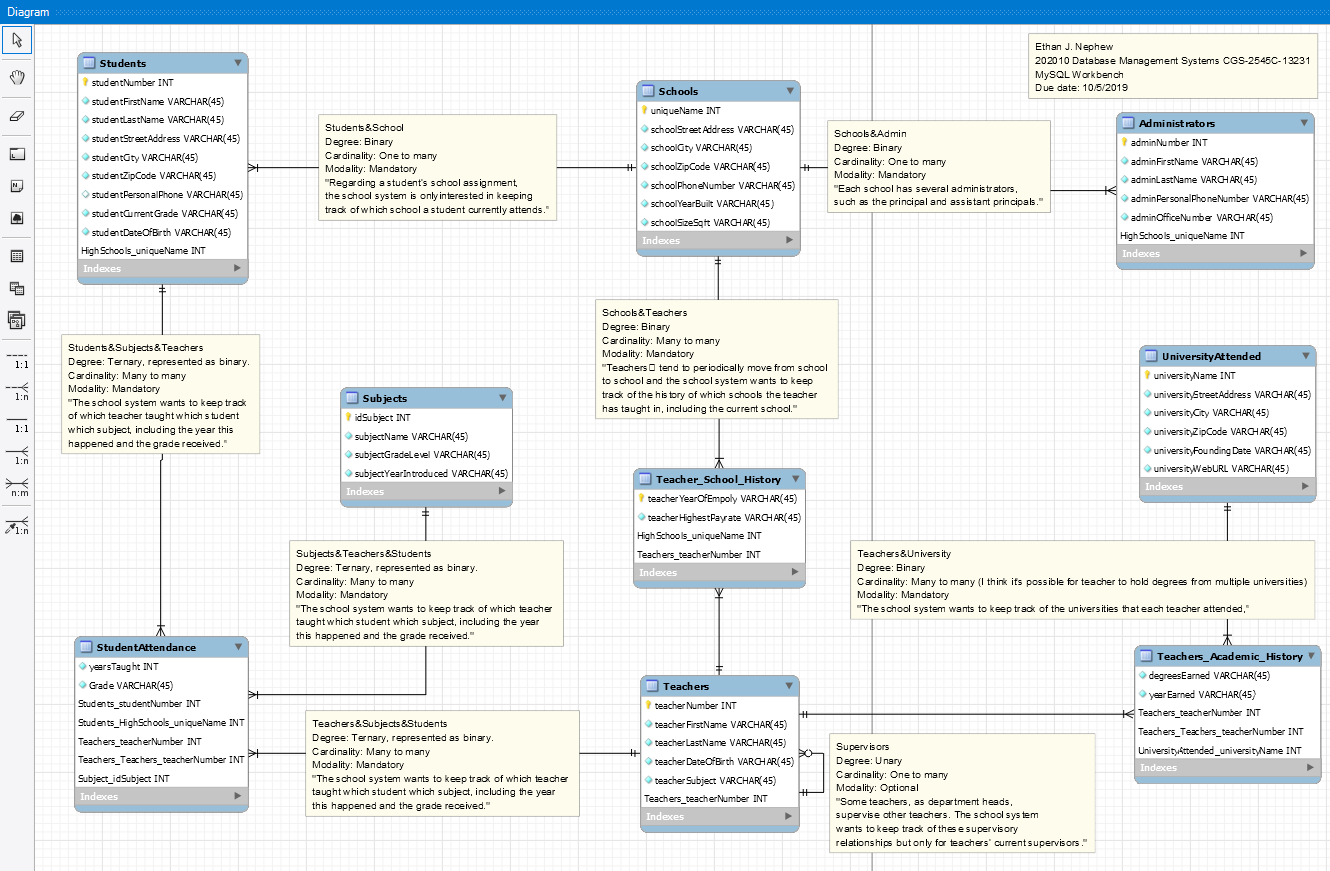
Understanding entities is fundamental, but understanding the data, relationships, attributes, and how entities are interconnected is where the power of relational databases is.
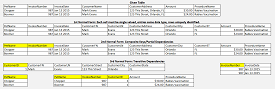
Database Normalization
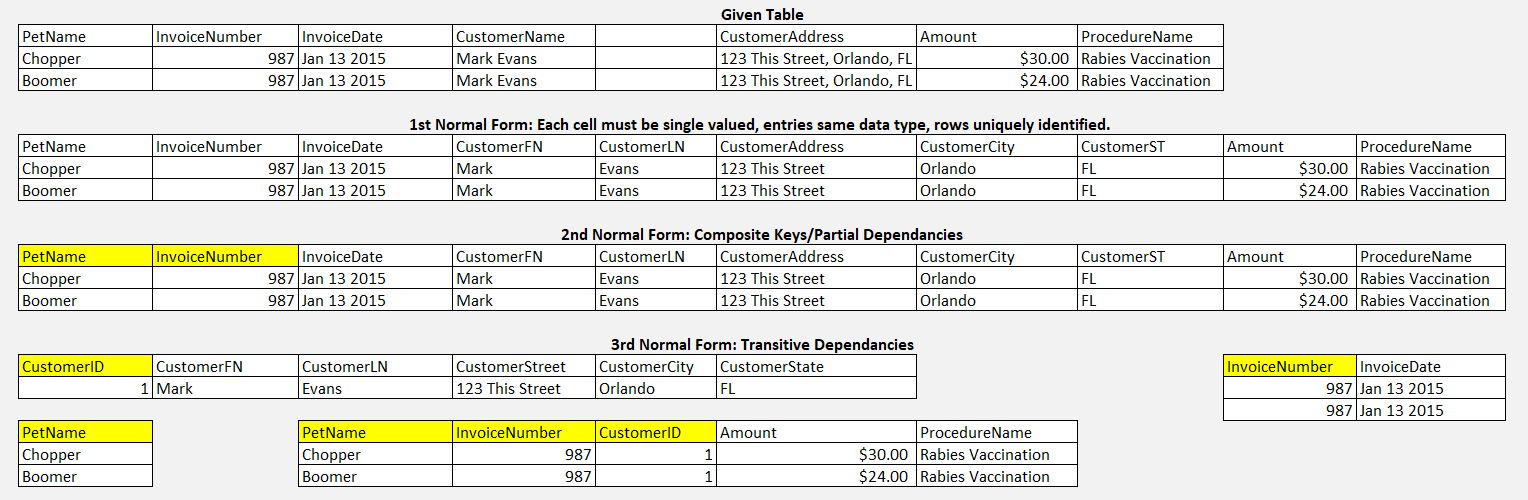
Learning how to normalize data was a challenge. It wasn't immediately intuitive to me, but I practiced and spent time studying extra-curricular content. I learned how to ensure data integrity and reduce data redundancy. Gaining a healthy appreciation of how important those two ventures are is something that I realized later.
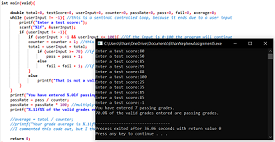
First Loop [C]
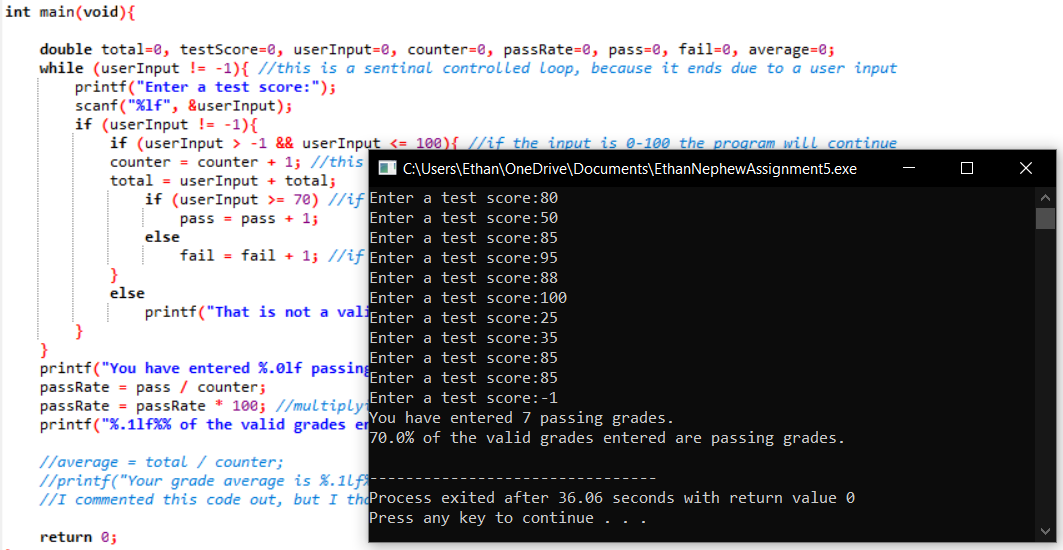
This is the first program that I wrote that utilized loops.
When I first wrote this, my mind was struggling to grasp the implications of the logic structures I was practicing,
but my imagination was beginning to pull me towards new possibilities.
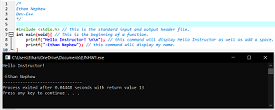
My First Program [C]
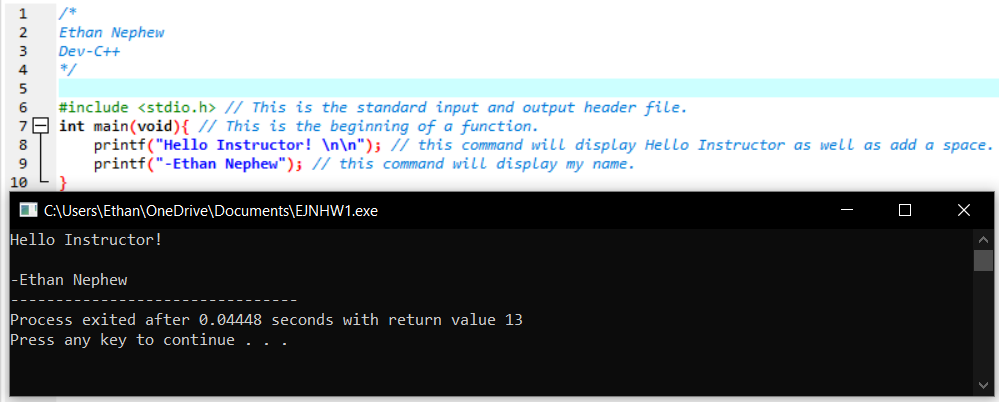
I vividly recall when I nervously signed up for my very first programming course.
With little delay I discovered that my mindset and strong academic habits would take me through this first challenge.
My first program was a simple console application with a textual output.